Fabric, fit & care
Silk Robes, Decoded: What 19-Momme Mulberry Silk Means for Comfort
A silk robe’s appeal is more than a glossy surface. Fabric weight, fiber quality, and small construction choices all shape how it moves, feels, and wears. Understanding 19 momme offers a useful starting point for reading those details.
Silk is often described in shorthand: smooth, light, luxurious. Those words capture an impression, but they do not tell the whole story of a robe. A garment’s feel depends on the silk itself, how densely it is woven, how much fabric is used, and the way its seams and closures are finished. One specification that helps make the conversation more precise is momme, a traditional measure of silk fabric weight.
A Gingerlily silk dressing gown made from 19-momme mulberry silk provides a practical example. The number is not a universal score for quality, nor a guarantee that a garment will suit every wearer. It is a clue: one way to understand the fabric’s substance and likely drape. Read alongside details such as long-strand mulberry silk, piping, pockets, and internal ties, it can help explain why one robe feels different from another.
What “momme” actually measures
Momme, commonly abbreviated as “mm,” measures the weight of silk fabric. It is based on the weight of a piece of silk of a standard area, rather than on the thickness of a single fiber. In broad terms, a higher momme figure means more silk by weight in the fabric. That can influence opacity, body, and the way a textile hangs, though the result also depends on the weave and finishing.
The distinction matters because silk is not one uniform material. A light silk may feel airy and fluid, while a heavier fabric can feel more substantial and offer greater coverage. Neither is automatically better. A scarf, a lining, bedding, and a dressing gown have different jobs; the useful weight depends on the garment’s intended use and the wearer’s preferences.
At 19 momme, a silk robe sits in a range often associated with a balanced, wearable fabric: light enough to move easily, yet substantial enough to have visible drape and a composed feel. That is a general guide, not a rigid rule. The number alone cannot reveal whether a particular silk is tightly woven, how it will respond to washing, or how the finished robe will fit. Construction and care remain part of the equation.
Why 19-momme silk can feel balanced
A robe is a layer worn close to the body, often during quiet transitions: after bathing, before bed, or at the beginning of the day. It needs to move with the wearer without feeling stiff or cumbersome. In that setting, fabric weight affects more than appearance. It contributes to how the robe settles across the shoulders, follows the body, and falls when the wearer walks or sits.
With 19-momme silk, the fabric has enough presence to create a graceful line while retaining the characteristic softness and fluidity associated with silk. It does not behave like a rigid textile. Rather, it can skim and fold, responding to movement and gravity. The precise effect varies with the weave, garment cut, and amount of ease built into the pattern.
Weight also shapes the sense of coverage. A very light silk may feel exceptionally delicate, but can be less opaque and more easily affected by a breeze or a layer underneath. A heavier silk can offer more substance, though it may feel warmer or less airy. For many robes, 19 momme represents a considered middle ground—not a claim that it is the ideal weight for everyone, but a useful point between gossamer lightness and a denser, weightier hand.
Comfort is personal. Someone who runs warm may prefer a lighter layer, while another person may value a little more coverage and structure. Climate, room temperature, the robe’s length, sleeve shape, and what is worn underneath all influence the experience. Momme helps frame the choice; it does not make the choice on its own.
Mulberry silk: a fiber description, not a weight
“Mulberry silk” describes the silk fiber’s source, while “19 momme” describes the fabric’s weight. These terms answer different questions. Mulberry silk is produced by silkworms that feed primarily on mulberry leaves. The fibers are known for their relative fineness and smoothness, and long strands can be spun into yarns that produce an even, refined surface.
That description should not be confused with a guarantee of identical quality across every garment. Fiber grade, yarn preparation, weaving, dyeing, and finishing all influence the finished cloth. A smooth hand can be desirable, but careful construction matters just as much when the garment is worn and laundered repeatedly.
In a robe described as 100 percent A-grade, long-strand mulberry silk, the material information points to both the fiber type and the form of silk used. The 19-momme figure adds a separate detail about the fabric’s weight. Together, these specifications give readers a more informative picture than a broad label such as “silk” alone, while still leaving practical questions—fit, finish, and care—to be considered.
Drape begins with the fabric, but does not end there
Drape is the way fabric falls and folds under its own weight. It is one of the defining qualities of a silk dressing gown: a sleeve can move softly rather than stand away from the arm, and a skirt panel can settle into a fluid line. But drape is not determined by momme alone. The weave, the cut, seam placement, and garment proportions all help shape the final silhouette.
A robe cut with generous ease may feel relaxed and allow layers beneath it. A more tailored shape can sit closer to the body and emphasize the fabric’s smooth fall. Long sleeves and a longer hem create a different sense of movement than a shorter, open design. Even small adjustments in the width of a panel can change how the robe swings when walking.
Silk’s natural surface can also interact with the body differently from cotton or linen. It tends to feel smooth against the skin and can move with little friction. That sensation is part of its appeal, but it is not a substitute for a comfortable fit. A belt tied too tightly, a seam that rubs, or sleeves that restrict movement can undermine the best fabric choice.
The quiet work of piping, pockets, and ties
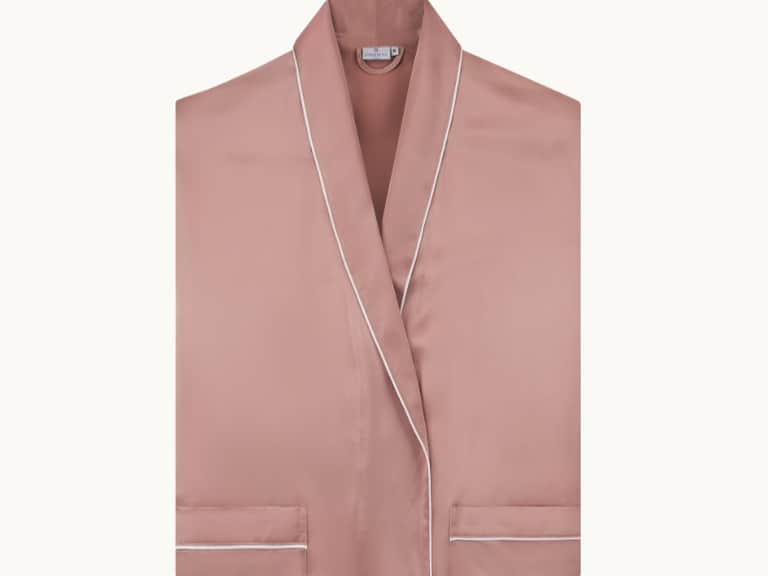
On a dressing gown, finishing details are not merely decorative. They help define the garment’s edges, organize its fit, and make it useful in daily wear. Piping, for instance, is a narrow strip of fabric inserted along a seam or edge. On a silk robe, contrasting piping can sharpen the outline of a collar, cuff, or front opening. It introduces a neat visual boundary and can make the garment’s shape easier to read.
Piping also requires careful sewing. Silk is a fine fabric, and seams can show needle marks or puckering if handled poorly. A clean finish depends on even stitching and an appropriate match between the trim and the main cloth. The point is not that piping makes a robe more comfortable by itself; rather, well-executed finishing can contribute to a robe that feels considered and holds its appearance with wear.
Pockets are another practical detail. They give the wearer a place for small essentials and can make a robe feel more useful around the home. Their placement matters: pockets should sit naturally and should not pull the garment out of shape. On a fluid fabric, pocket construction needs to be light and balanced so it does not create unnecessary weight or distortion.
A waist belt provides an adjustable closure, allowing the robe to be worn more loosely or drawn closer at the waist. Internal ties add a second point of security inside the garment. They help keep the front panels aligned and reduce the chance that the robe shifts open as the wearer moves. These ties are easy to overlook in a product description, but they can make a noticeable difference to everyday wearability.
The Woodrose silk dressing gown offers a clear illustration of these elements: it is described as 100 percent A-grade, long-strand mulberry silk at 19 momme, with ivory piping, two pockets, a silk belt, and internal ties. These details show how fabric specification and garment design work together. The robe’s weight describes the cloth; its finishing and closures help determine how that cloth functions on the body.
How to judge a silk robe beyond its label
Specifications are useful, but they are most helpful when read as a group. A thoughtful assessment begins with fiber content and fabric weight, then looks at the details that affect fit and use. A short checklist can make descriptions easier to interpret:
- Fiber: Is the robe described as mulberry silk, and is the fiber content stated clearly?
- Weight: Is a momme figure provided, and does it suit the intended role of a light robe or a more substantial layer?
- Construction: Are seams, edges, and trim described in enough detail to understand how the garment is finished?
- Fit: Does the robe use a belt, internal ties, or another closure, and can it be adjusted comfortably?
- Use: Are pockets and sleeve or hem proportions appropriate for how the garment will be worn?
- Care: Are the washing and drying instructions clear and realistic for the wearer?
It is also wise to distinguish factual specifications from broad promotional language. Words such as “luxurious” describe an impression, while fiber content, fabric weight, and construction details are more concrete. Neither kind of information tells the whole story by itself. Together, they help set expectations without pretending that a number can predict every aspect of comfort.
Silk robe care: protect the surface and shape
Silk’s smoothness and sheen make it distinctive, but its care needs deserve attention. Heat, agitation, harsh detergents, and prolonged exposure to direct sunlight can affect color and surface. The safest approach is to follow the garment’s own care label, because dyes, trims, and construction may change what is appropriate for one robe compared with another.
For the 19-momme silk dressing gown described here, the stated guidance is to wash on a delicate cycle at no more than 30°C, using a small amount of mild liquid silk detergent. After washing, air-dry the garment, then use a cool iron if needed. These are product-specific instructions, not a universal prescription for every silk item. When a label advises dry cleaning or hand washing, follow that guidance instead.
Before washing, close or secure the belt and separate the robe from garments with hooks, zippers, or rough surfaces that could snag it. Avoid overloading the machine; silk needs room to move gently. Use a mild detergent intended for delicate fabrics, and skip bleach or aggressive stain treatments unless the care instructions explicitly allow them.
For drying, support the garment rather than twisting or wringing it. Excess force can stress wet fibers and distort seams. Air-drying away from strong direct sun helps limit fading. If ironing is permitted, use a cool setting and test a discreet area first. A pressing cloth can provide an extra layer of protection, particularly when the fabric is dry or the iron’s temperature is uncertain.
Storage matters, too. Make sure the robe is fully dry before putting it away. A broad hanger can help preserve the shoulders, while a breathable storage space allows air to circulate. Avoid leaving silk compressed under heavy items for long periods, and keep it away from prolonged sunlight. These modest habits are more useful than frequent, unnecessary washing: airing a robe after wear can help it stay fresh between washes, provided the garment is clean and dry.
What 19 momme can—and cannot—tell you
A momme figure is a helpful point of reference, not a verdict. It indicates fabric weight, but does not independently measure softness, durability, breathability, or ethical sourcing. It cannot tell you whether a robe’s shoulders will fit, whether its belt will stay in place, or how its color will look in different light. Those outcomes depend on the full design and the standards of its manufacture.
Nor does a higher number automatically make a silk robe the better choice. More fabric weight may provide a more substantial feel, but it may also create a warmer or less airy garment. A lower-weight silk may be preferable when the goal is a nearly weightless layer. The right balance depends on climate, personal comfort, intended use, and preference for drape and coverage.
For that reason, it is useful to read fabric information alongside construction details and care instructions. A well-finished robe can feel secure and comfortable because its closures, seams, and proportions have been considered—not simply because the cloth carries a particular number.
The most useful way to read the label
Think of 19 momme as a translator between a technical specification and a likely tactile experience. It suggests a silk fabric with enough substance to fall gracefully and offer a composed sense of coverage, while retaining the softness and movement associated with silk. Mulberry silk identifies the fiber; long-strand and grade descriptions add further context; piping, pockets, and internal ties reveal how the garment is finished and secured.
In a silk dressing gown, comfort emerges from the combination. The fabric needs to feel agreeable against the skin, the cut must allow movement, and the closure should hold without constriction. Care then determines how well the garment retains its sheen and shape over time. No single feature does all the work.
For readers comparing silk robes, the practical question is not simply, “Is 19 momme good?” It is: “Does this weight, fiber, construction, and care routine fit the way I want to wear and maintain a robe?” That question turns a technical label into useful information—and makes a beautiful textile easier to understand as a garment built for real life.