Fabric, fit & everyday comfort
Coyuchi Loungewear: Why Linen Robes Work for Everyday Layering
A good robe is less an occasion than a small daily convenience: something to reach for between sleep and breakfast, after a shower, or when the room feels cooler than expected. In Coyuchi loungewear, organic linen and an easy wrap shape make the robe a considered layer—relaxed in spirit, useful in practice.
Published October 16, 2026
The quiet usefulness of a robe
Some garments announce themselves. A robe usually does the opposite. It waits near the bed or bathroom, ready for the first cool minutes of the morning, a pause between tasks, or the transition from a bath to the rest of the evening. Its value is measured less in spectacle than in how naturally it fits into a routine.
That usefulness depends on a balance. A robe should offer enough coverage to feel comfortable, but not so much weight that it becomes cumbersome. It should stay in place without feeling restrictive and allow a wearer to move freely through ordinary household tasks. Fabric, cut, and small construction choices all contribute to that balance.
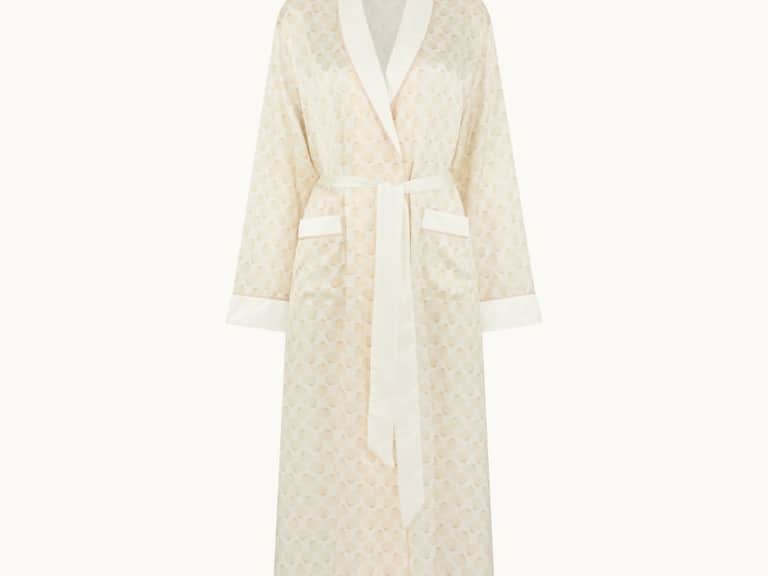
The organic linen robe associated with Coyuchi loungewear brings those elements together in a familiar wrap silhouette. A self-tie belt adjusts the fit, a shawl collar adds coverage around the neck, and on-seam pockets provide a place for small essentials—or simply a comfortable place for the hands. The result is not complicated. That is part of the point.
What linen brings to loungewear
Linen begins as flax fiber, then becomes a woven fabric with a character distinct from cotton knits and brushed sleepwear. Its surface often feels slightly textured rather than uniformly smooth. It has a relaxed drape, and its creases are part of its familiar appearance. For a robe, this gives the garment a light, informal presence that suits everyday use.
Breathability is one reason linen is often chosen for warm-weather clothing and indoor layers. The open structure of many linen weaves can allow air to circulate, helping the fabric feel less close against the body than a dense, heavy textile. That does not make linen a climate-control system: comfort depends on weave, weight, room temperature, activity, and personal preference. But a lightweight linen robe can feel more airy than a thick fleece or plush terry layer.
Linen also absorbs moisture, a quality that can be useful after washing or bathing. It is not the same as a highly absorbent towel, and a robe’s performance will depend on its construction and fabric weight. Think of it primarily as a comfortable covering for moving around after a shower, not a substitute for drying off.
Another characteristic is how linen changes with use. New linen may feel crisp or somewhat firm; repeated wear and washing can soften it. The fabric’s natural creasing is not necessarily a sign of poor care. In relaxed home clothing, a lived-in finish can look entirely at home. If a smooth, pressed appearance is important, linen may require more attention than a knit robe that naturally resists sharp creases.
The contrast with jersey is instructive. Jersey is knitted, so its loops give it stretch and a pliable, close-to-body feel. A jersey robe can move with the wearer and may feel soft from the outset. Woven linen generally offers less inherent stretch, more structure, and a drier, airier hand. Neither is universally more comfortable. The useful question is whether a wearer prefers the forgiving give of a knit or the breathable ease and textured character of a woven fabric.
A wrap shape that adapts
The wrap front is a practical design because it adjusts without relying on a row of fixed buttons or a precise closure. A self-tie belt draws the two front panels together and lets the wearer decide how closely the robe sits. Looser, it feels more open and easy. Tied more securely, it provides greater coverage and helps the garment stay in place while walking or reaching.
That adjustability makes robe fit less about a single exact measurement and more about proportion. The shoulder line should allow comfortable movement without pulling. The body should overlap enough to remain secure when the wearer sits, bends, or takes a step. Sleeves should offer the desired coverage without dragging through water or catching on household objects. A robe that feels comfortable standing still but restricts a simple reach is not doing its job.
A shawl collar contributes both shape and function. Its folded edge frames the neckline and can provide a little extra warmth around the shoulders. Unlike a hood, it stays close to the garment and does not add volume at the back of the neck. The collar’s effect is subtle: more finished than a plain open edge, but still suited to an informal layer.
Length is another matter of use. A shorter robe can feel less encumbering and may be convenient in a warm room. A longer cut offers more leg coverage, which can be welcome on cool mornings or when moving between rooms. The right length depends on height, preference, and how the robe will be worn. Checking the garment’s stated measurements, when available, is more reliable than assuming that a label such as “long” will mean the same thing to every wearer.
Fit also changes with the layers underneath. Over a light nightdress, a wrap robe may sit comfortably with a modest overlap. Over thicker pajamas, the same robe may feel tighter through the sleeves or body. Consider the intended base layer when judging ease. Loungewear should support movement, not demand that the wearer remain carefully posed to keep it comfortable.
Small details, repeated every day
Pockets can seem incidental until they are missing. On-seam pockets keep the outer lines of a robe relatively simple while offering somewhere to place a tissue, hair tie, or phone. Their position matters: pockets that sit too low or pull open under the weight of their contents can disrupt the garment’s drape. For a robe intended as a light layer, they are best used for small items rather than anything heavy.
The belt and belt loops deserve a quick inspection, too. A belt that is long enough to tie comfortably and loops positioned near the waist can make adjusting the robe straightforward. Internal ties, when a design includes them, can help keep the front panels aligned. Without them, the outer belt still does the essential work, but the wearer may need to retie it more often during active movement.
Seam placement influences comfort in quieter ways. On-seam pockets keep pocket construction integrated into the side seams; clean finishing can reduce bulk where fabric meets fabric. A robe is not usually a close-fitting garment, but seams that rub or restrict the shoulders can become noticeable over long periods of wear. These are details worth considering because comfort is often the accumulated result of small decisions.
There is a difference, too, between an intentionally relaxed silhouette and a garment that simply feels oversized. The former has enough room for movement while keeping its proportions balanced. The latter can slip off the shoulders, drag at the cuffs, or bunch beneath the belt. A useful robe feels easy without requiring constant adjustment.
Layering beyond the bedroom
A linen robe can be more versatile than its name suggests. At home, it serves as a transitional layer over sleepwear, a light covering after bathing, or an extra garment when the morning starts cool. In warmer conditions, it may be enough on its own for short stretches indoors. In colder weather, it can sit over pajamas or a soft top as one part of a broader layering system.
Layering works best when each piece has a clear role. A breathable robe can add coverage without the insulating bulk of a heavy dressing gown. If more warmth is needed, a knit or brushed layer beneath it may do more than choosing an unusually heavy linen robe. Conversely, in a warm, humid room, a light robe worn over minimal sleepwear may feel more comfortable than several close-fitting layers.
The loose wrap silhouette also makes the robe forgiving across changing routines. It can be put on quickly, adjusted at the waist, and removed without fuss. That ease is a form of design, even if it does not look technical. Loungewear succeeds when it fits real movement: carrying a cup, opening a window, reading at a table, or settling into a quiet start to the day.
Styling need not complicate the idea. A robe can be worn with simple sleepwear, a cotton nightdress, or lightweight lounge separates. Its texture supplies enough visual interest without requiring coordinated accessories. For a polished but unforced appearance, keep the layers underneath comfortable and let the robe’s drape do the work.
Care that respects the fiber
Care instructions printed on the garment should take priority over general advice. Linen blends, dyes, trims, and finishing treatments can change what a fabric safely tolerates. If the care label recommends machine washing, use the stated temperature and cycle. When instructions are uncertain, a cautious approach—cool water, a gentle cycle, and mild detergent—can help limit unnecessary stress on the fibers.
Avoid overloading the washing machine. Linen needs room to move through water, and a crowded drum can increase creasing and friction. Wash similar colors together, particularly when the robe is new or deeply colored. Strong bleach and harsh stain treatments can affect color and fiber strength, so use them only if the label explicitly permits them.
Drying is where a little restraint can make a visible difference. High heat may increase shrinkage or leave linen feeling harsher, depending on the fabric and construction. If tumble drying is permitted, a low setting is generally gentler than prolonged high heat. Removing the robe while slightly damp and smoothing the seams by hand can reduce deep wrinkles. Air drying is another option where practical; reshape the garment and hang it so the shoulders are supported.
Ironing is a matter of preference, not a requirement for every linen garment. If a neater finish is wanted, follow the care label’s temperature guidance and consider pressing while the fabric is still slightly damp. A light touch is often sufficient. For an everyday robe, natural creasing can be accepted as part of linen’s character rather than treated as a defect to eliminate.
Store the robe clean and fully dry. A ventilated closet or hook allows air to circulate and helps avoid lingering moisture. Hanging it by a sturdy loop or broad hanger can preserve its shape between wears. If the robe becomes damp after use, give it time to air out before putting it away. Good care is less about elaborate ritual than about avoiding extremes: excessive heat, harsh chemicals, and prolonged dampness.
How to decide whether linen suits you
Fabric preference is personal, and a robe is close enough to the body that small differences matter. Linen may suit someone who values an airy feel, a textured surface, and a relaxed drape. Someone who wants immediate softness, stretch, or a close-fitting layer may prefer jersey or another knit. Those who want substantial warmth after bathing may be happier with terry or a heavier robe.
Before choosing, consider the temperature of the room, the time of year, and the garment’s main purpose. Is it for a quick morning layer, a post-shower covering, or prolonged lounging? Does the wearer want sleeves that reach the wrist, or a shorter cuff that stays clear of the hands? Is a wrap front convenient, or would a more fixed closure feel secure? The answers are more useful than a general claim that one fabric is best.
For a robe with pockets, think about how they will be used. For a tie-front style, consider whether the belt feels easy to adjust and whether the overlap remains comfortable when sitting. For linen, allow for the possibility of creasing and follow the care label with attention to drying. These practical checks make expectations clearer before the garment becomes part of a daily routine.
A useful layer, not a special occasion
The appeal of Coyuchi loungewear in linen is rooted in ordinary repetition. A breathable woven fabric, a relaxed wrap cut, and functional details can turn a robe into an easy companion to the day’s quieter moments. The shawl collar adds a little coverage, the self-tie belt keeps the fit adjustable, and the pockets make the garment more useful without changing its calm, uncomplicated character.
That does not mean linen is ideal for every climate or every preference. It is less stretchy than jersey, can crease readily, and may not supply the plush warmth some people want. Its strengths are different: lightness, airflow, texture, and a drape that feels at ease rather than rigid. Once those qualities are understood, it becomes easier to judge whether an organic linen robe belongs in a particular loungewear routine.
Comfort often depends on the garments that ask the least of us. A robe that stays put, gives room to move, and feels appropriate across more than one part of the day can earn its place through use. In that sense, the best everyday layer is not necessarily the most elaborate. It is the one that makes a familiar routine feel a little easier.
Quick reference: choosing and caring for a linen robe
- Check the fabric: linen offers a textured, airy feel; jersey offers stretch and a softer, more pliable hand.
- Assess the wrap: look for comfortable overlap and a belt that adjusts easily without feeling restrictive.
- Consider movement: test shoulder ease, sleeve coverage, and length in the positions you use at home.
- Use pockets sensibly: on-seam pockets are handy for small items, but heavy contents can pull on a light robe.
- Follow the label: choose the stated wash cycle and temperature, and avoid assuming every linen fabric has identical care needs.
- Dry gently: limit high heat, reshape while damp when appropriate, and store only when the garment is fully dry.